Gaza – Ma'an – Israeli artillery fire killed 15 Palestinians, including Husam Zahhar, the son of senior Hamas leader Mahmoud Zahhar, while shelling the Zeitoun neighborhood of Gaza City, witnesses and medics said.An estimated 45 other Palestinians have been injured.
Eyewitnesses said that at least numerous Palestinian activists have been injured by the shelling as Israeli tanks and armored vehicles slowly pushed towards the eastern Gaza City neighborhoods of Ash-Shuja'iyya and Zeitoun.
Palestinian medics at Ash-Shifa hospital identified some of the dead as Rami Farahat, Ahid Ashur, Muhamad Abu Laban Badwan Auda, Khalil Mudallal and Mustafa Salim .
The eyewitnesses said also that Israeli bulldozers destroyed farmers' groves in the area.Separately, witnesses said that Israeli military vehicles invaded the industrial zone near the Erez border crossing in the northern Gaza Strip.
Zahhar reactsMahmoud Zahhar is one of Hamas' founders and served as Palestinan foreign minister from 2006 to 2007. In September 2003, Zahhar's other son Khaled was killed in an Israeli airstrike that completely destroyed Zahhar's home in Zeitoun.
"This is one of the results of the Bush visit. He encouraged the Israelis to kill our people," Zahhar told reporters."What is going on in Gaza today is a shame for all of those who cooperated with [US President George W.] Bush, the criminal, and with the Zionists," Zahar said. "I am talking about all kings, presidents and ministers," he said, in an apparent criticism of Arab leaders who met with Bush. "We are telling them, today they are killing our sons, tomorrow they are going to kill yours."
Tuesday, January 15, 2008
Monday, January 14, 2008

Witnessing the Siege
By Safa Joudeh writing from occupied Gaza Strip, Palestine,
14 January 2008
It is supposed that one can build factual perception by reading the statistics and getting all the hard evidence, but I recently realized that a complete cognitive process relies first and foremost on visuals -- seeing the picture for oneself.I joined a camera crew and producer shooting footage for a first-person interview on the Israeli siege on Gaza .
The interviewee was Dr. Eyad El-Sarraj, head of the Palestinian International Campaign to End the Siege on Gaza , a coalition of organizations and individuals set out to do just that. We met with Dr. Sarraj at his office and booked him for the day.
Based on his humanitarian activism with the campaign, Dr. Sarraj would determine which areas were most pressing in terms of the crisis in Gaza , and therefore deserved priority over other aspects during the short interview. Dr. Sarraj confirmed what the producer and the rest of the crew had already mentioned -- when it came to crisis in Gaza , the health sector and the economic sector were at the top of the list. It was decided we would visit a couple of hospitals and a factory to shoot the right footage.
This is where the cameraman started taping and didn't stop till the end of the day.I cringed as I walked into al-Shifa hospital for the first time. Gaza City 's largest hospital, al-Shifa provides treatment for critical cases from all over Gaza , in addition to being the primary hospital for non-critical cases. That day the hospital was overflowing with the ailing, the wounded and the dying. We were lead to just one of over 1,500 patients who were denied permission to leave Gaza despite suffering conditions that threatened to be terminal or at best, permanently debilitating. A doctor explained that a 19-year-old young man with a drawn face propped up on a pillow, was at risk of having both legs amputated unless he was able to have a complicated medical procedure performed within the next few days, a procedure that is not available in Gaza . Upon further inquiry, we were informed by the young man's mother that her son had been shot several times by Israeli soldiers.A short walk to the dialysis unit revealed ten machines gathering dust in the corridor. We were informed that the lack of spare parts, disposable items such as needles, and medicines for dialysis patients prevented them from being able to operate the life-saving machines. Furthermore, both hospitals and pharmacies in Gaza have run out of 92 out of about 400 types of essential medicines used to treat other illnesses.At the Children's Hospital in the Nasser area of Gaza City, the doctor lead us straight to the infant care unit where several incubators were occupied and others lay unused in a corner. We peered at the unnaturally small newborns struggling for each breath. The food crisis in Gaza has lead struggling undernourished mothers to give birth to unhealthy babies. It dawned on me that despite the gravity of the medical crisis, the inadequacy or shortage of medical equipment bore no comparison to the lack of the most important human need of all: food.The camera rolled on as Dr. Sarraj made his way back into the car clearly distraught and deeply upset about the seemingly predestined condemnation of life manifested in the frail little bodies laying in the incubators, helpless, flawless, yet already scarred for life. Dr. Sarraj cursed under his breath, scoffed a not-much-needed reminder of the hell we are all living in Gaza .We made our way to a tile and brick factory that had been shut down due to the lack of cement and machine parts essential for it to function.Entering the industrial zone en route to our third and final destination, I was struck by the brazen contrast between my distant recollection of the area -- a once noisy, hectic bustle of trucks and machinery is presently an abandoned padlocked stretch of warehouses.A guard ushered us through the gates and as soon as we drove in, it was obvious that when the factory owner had informed Dr. Sarraj that they had closed down over a month ago, and that he had come in that day only to talk to us and allow the crew to take pictures, he wasn't joking. Except for the security guard, the owner and his assistant there was not a soul or a working machine in sight on the entire premises. "It's not only that the 40 families of the factory workers that are out of a job no longer have any income" the owner told us, "we manufacture bricks, strong bricks used for sidewalks and streets. Because there is no cement, we are not able to make these bricks anymore." The streets of Gaza we drove through on our way to the factory looked more like excavation sites than streets. I thought of all the 67,000 other factory workers and their families, also out of income.
Then another shocking statistic that only then seemed to make sense -- the annual per capita income in Gaza is $600. Compare that to $21,000, the annual per capita in Israel , barely a few miles away from where we were standing.Dr. Sarraj had joked that the six or so hours of shooting would have to be condensed to three minutes. Three small minutes?! We had taken up his entire day and would take part of the next morning. He's a busy man who not only heads the campaign, but he is also president of the Gaza Mental Health Programme, and president of the board of the American School in Gaza .
Dr. Sarraj has an influential role as a Palestinian activist, political thinker and intellectual, with many things to say and many people to say them to. He was happy to give the producer and the cameraman his whole day, though.
Though Dr. Sarraj and these journalists are determined to get their story out there -- no matter how much air time they get -- it's up to the rest of the world to listen.
14 January 2008
It is supposed that one can build factual perception by reading the statistics and getting all the hard evidence, but I recently realized that a complete cognitive process relies first and foremost on visuals -- seeing the picture for oneself.I joined a camera crew and producer shooting footage for a first-person interview on the Israeli siege on Gaza .
The interviewee was Dr. Eyad El-Sarraj, head of the Palestinian International Campaign to End the Siege on Gaza , a coalition of organizations and individuals set out to do just that. We met with Dr. Sarraj at his office and booked him for the day.
Based on his humanitarian activism with the campaign, Dr. Sarraj would determine which areas were most pressing in terms of the crisis in Gaza , and therefore deserved priority over other aspects during the short interview. Dr. Sarraj confirmed what the producer and the rest of the crew had already mentioned -- when it came to crisis in Gaza , the health sector and the economic sector were at the top of the list. It was decided we would visit a couple of hospitals and a factory to shoot the right footage.
This is where the cameraman started taping and didn't stop till the end of the day.I cringed as I walked into al-Shifa hospital for the first time. Gaza City 's largest hospital, al-Shifa provides treatment for critical cases from all over Gaza , in addition to being the primary hospital for non-critical cases. That day the hospital was overflowing with the ailing, the wounded and the dying. We were lead to just one of over 1,500 patients who were denied permission to leave Gaza despite suffering conditions that threatened to be terminal or at best, permanently debilitating. A doctor explained that a 19-year-old young man with a drawn face propped up on a pillow, was at risk of having both legs amputated unless he was able to have a complicated medical procedure performed within the next few days, a procedure that is not available in Gaza . Upon further inquiry, we were informed by the young man's mother that her son had been shot several times by Israeli soldiers.A short walk to the dialysis unit revealed ten machines gathering dust in the corridor. We were informed that the lack of spare parts, disposable items such as needles, and medicines for dialysis patients prevented them from being able to operate the life-saving machines. Furthermore, both hospitals and pharmacies in Gaza have run out of 92 out of about 400 types of essential medicines used to treat other illnesses.At the Children's Hospital in the Nasser area of Gaza City, the doctor lead us straight to the infant care unit where several incubators were occupied and others lay unused in a corner. We peered at the unnaturally small newborns struggling for each breath. The food crisis in Gaza has lead struggling undernourished mothers to give birth to unhealthy babies. It dawned on me that despite the gravity of the medical crisis, the inadequacy or shortage of medical equipment bore no comparison to the lack of the most important human need of all: food.The camera rolled on as Dr. Sarraj made his way back into the car clearly distraught and deeply upset about the seemingly predestined condemnation of life manifested in the frail little bodies laying in the incubators, helpless, flawless, yet already scarred for life. Dr. Sarraj cursed under his breath, scoffed a not-much-needed reminder of the hell we are all living in Gaza .We made our way to a tile and brick factory that had been shut down due to the lack of cement and machine parts essential for it to function.Entering the industrial zone en route to our third and final destination, I was struck by the brazen contrast between my distant recollection of the area -- a once noisy, hectic bustle of trucks and machinery is presently an abandoned padlocked stretch of warehouses.A guard ushered us through the gates and as soon as we drove in, it was obvious that when the factory owner had informed Dr. Sarraj that they had closed down over a month ago, and that he had come in that day only to talk to us and allow the crew to take pictures, he wasn't joking. Except for the security guard, the owner and his assistant there was not a soul or a working machine in sight on the entire premises. "It's not only that the 40 families of the factory workers that are out of a job no longer have any income" the owner told us, "we manufacture bricks, strong bricks used for sidewalks and streets. Because there is no cement, we are not able to make these bricks anymore." The streets of Gaza we drove through on our way to the factory looked more like excavation sites than streets. I thought of all the 67,000 other factory workers and their families, also out of income.
Then another shocking statistic that only then seemed to make sense -- the annual per capita income in Gaza is $600. Compare that to $21,000, the annual per capita in Israel , barely a few miles away from where we were standing.Dr. Sarraj had joked that the six or so hours of shooting would have to be condensed to three minutes. Three small minutes?! We had taken up his entire day and would take part of the next morning. He's a busy man who not only heads the campaign, but he is also president of the Gaza Mental Health Programme, and president of the board of the American School in Gaza .
Dr. Sarraj has an influential role as a Palestinian activist, political thinker and intellectual, with many things to say and many people to say them to. He was happy to give the producer and the cameraman his whole day, though.
Though Dr. Sarraj and these journalists are determined to get their story out there -- no matter how much air time they get -- it's up to the rest of the world to listen.
Sunday, January 13, 2008
3شهداء من فصائل المقاومة في غارة إسرائيلية على سيارة قرب منزل هنية غرب مخيم الشاطيء

غزة- معا- استشهد ثلاثة مقاومين في قصف جوي اسرائيلي استهدف سيارة قرب منزل اسماعيل هنية في مخيم الشاطي بمدينة غزة.وقالت المصادر الامنية في مشفى الشفاء لوكالة معا ان 3 شهداء سقطوا في الغارة على السيارة من نوع "ماغنونم" استهدفتها طائرة اسرائيلية في المربع الامني القريب من منزل رئيس الوزراء المقال اسماعيل هنية .
وطبقا لذات المصارد فان اصابة اثنين من الجرحى وصفت بالحرجة جراء اصابتهما بحروق بالغة في انحاء الجسم.
وقال الناطق باسم كتائب الاقصى ابو الوليد لوكالة معا ان الشهيد المستهدف هو نضال حسين
وقال الناطق باسم كتائب الاقصى ابو الوليد لوكالة معا ان الشهيد المستهدف هو نضال حسين
العامودي 35 عاما القيادي في الكتائب , فيما ينتمي الشهيد الثاني لجيش الاسلام ماهر المبحوح , بينما لم تعرف هوية الشهيد الثالث
The health ministry in the PA caretaker government on Sunday accused the zionist occupation authority of carrying out "systematic execution" of Palestinian patients in the Gaza Strip in flagrant violation of international laws.
The ministry, in a press release, said that the death of three patients in Gaza on Saturday bringing the number of victims of the zOA siege to 68 in the past seven months reflected the zOA's insistence on going ahead with its plan.
It pointed out that the three suffered from cancer of the kidney, of the stomach and of the blood.
The ministry said that the death of three patients on a single day pointed to a "serious indicator" threatening the lives of hundreds of patients in Gaza.
It stressed that legal and human rights institutions should assume their roles in demanding an immediate end to the siege especially the ban on patients' travel and on entry of enough and needed medications.
The ministry, in a press release, said that the death of three patients in Gaza on Saturday bringing the number of victims of the zOA siege to 68 in the past seven months reflected the zOA's insistence on going ahead with its plan.
It pointed out that the three suffered from cancer of the kidney, of the stomach and of the blood.
The ministry said that the death of three patients on a single day pointed to a "serious indicator" threatening the lives of hundreds of patients in Gaza.
It stressed that legal and human rights institutions should assume their roles in demanding an immediate end to the siege especially the ban on patients' travel and on entry of enough and needed medications.
Two Kiled and six injured and the silence is deafening

zionist warplanes killed two Hamas fighters and wounded at least six other Palestinians during an air raid on a military installation belonging to Hamas' armed wing, the Al-Qassam Brigades, near the Gaza Strip city of Khan Younis on Saturday evening.
Witnesses said the zionist aircraft fired three missiles at the military site.
Mu'awiya Hassanain, the director of ambulance and emergency services in the Palestinian Health Ministry confirmed the deaths of Mansour Albraim, and Ayed Abu Abed, both fighters with the Al-Qassam Brigades. They had been taken to Nasser hospital.
From Ma'an News
رئيس "شاباك": "قتلنا ألف مخرب في غزة خلال عامين"
عــــرب48
تبجح يوفال ديسكين، رئيس الـ "شاباك" الإسرائيلي، في جلسة الحكومة الأسبوعية، صباح اليوم، بأن جيش "الدفاع "الإسرائيلي والـ "شاباك" قتلا في السنتين الأخيرتين نحو 1000 من المقاومين الفلسطينيين في قطاع غزة. جاءت اقوال ديسكين في معرض استعراضه الأمني الذي يقدمه "شاباك" أسبوعيا للطاقم الوزاري.وعقب آفي ديختر، وزير "الأمن" الداخلي بالقول "إن الأمر يعني أنه تم قتل خمس الناشطين "الإرهابيين" في قطاع غزة، حيث من المعروف أن في القطاع نحو عشرين ألفا من "ألمخربين"، حاثا السياسيين "أن يتعاملوا بشكل مختلف من أجل وضع حد لحرب الإستنزاف ضد سديروت والبلدات القريبة إلى غزة" أضاف ديختر، قائلا:" إنها حرب غير متكافئة حيث أن إسرائيل تضرب "المخربين" فيما "الإرهاب" الفلسطيني يصيب المواطنين" على حد زعمه، والدليل على ذلك هو رحيل ثلاثة آلاف مواطن من سديروت في الفترة الأخيرة..وفي سياق متصل، قال ديختر في جلسة وزراء حزبه "كاديما"، إن من الضروري إجراء بحث في مؤسسات الحزب قبل التوصل إلى اتفاقية إطار مع الفلسطينيين، حيث من غير المجدي أن نصل إلى اتفاق قبل تنفيذ المرحلة الأولى من خارطة الطريق التي نوليها الأولوية قبل أي شيء. يجب، أوّلا، الطلب إلى الفلسطينيين تنفيذ سلسلة من الأمور لفرض القانون.من جانبه، أكد إيهود أولمرت، في جلسة الحكومة الأسبوعية ذاتها، على أن الرئيس الأمريكي جورج بوش، قد وعد بأنه لن يتم تنفيذ أي اتفاق "بيننا وبين الفلسطينيين قبل تنفيذ خارطة الطريق بجميع بنودها، بما فيها الإلتزام بالمحافظة على أمن إسرائيل".
Gagged while Gaza is crushed
12 January 2008 Stuart Littlewood calls on readers to request the Committee on Standards in Public Life to examine whether there is undue Israeli influence at the heart of the British government that is preventing it from taking a principled stand on Israeli violations of Palestinian human rights. The British government has maintained a strict silence on the cruel blockade of Gaza and efforts by Israel and its Western allies to crush the civilian population and eliminate their democratic choice, Hamas. Not a word of criticism has been heard from the great and the good about this wickedness. In the meantime, some 20 surgeons, academics and others, with knowledge of Gaza and the occupied Palestinian territories, have written urging Britain’s corruption watchdog, the Committee on Standards in Public Life, to examine whether there is undue Israeli influence at the heart of the British government. One of these, David Halpin of www.doveanddolphin.co.uk, is a trauma surgeon who has advised the Hamas government on how they should investigate the use of illegal weapons by Israel and last year led a team of seven UK doctors into Gaza. The Dove and Dolphin Medical Centre, named after David's charity, was opened then. The Israel lobby's deep penetration of our political system, many feel, is preventing Britain from taking a principled stand on Middle East matters, including the long catalogue of violations of Palestinian human rights, the Gaza siege being a particularly nasty example. Our minister with responsibility for Middle East affairs is a former chairman of Labour Friends of Israel. His shadow is a member of Conservative Friends of Israel. Indeed, a large majority of Conservative MPs and MEPs are Friends of Israel. The lobby also claims a considerable number of Labour MPs and ministers. The Liberal Democrat Friends of Israel website brazenly states that its first aim is to maximize support for the State of Israel within the party and Parliament. All MPs (and many parliamentary candidates) are exposed to the lobby's influence and a large number apparently carry its message into their parliamentary work, causing damage to our democracy and harm to Britain's interests and reputation abroad. The regime's tentacles reach into the Standards Committee itself, where the three political party appointees are top-ranking Friends of Israel or closely connected to Friends of Israel. The committee, as everyone knows, is there to uphold the famous Seven Principles of Public Life. The presence at the heart of government of people pledged to promote the interests of another country – and not declaring their dual allegiance – undermines at least five of these sacred principles. What will the public, already sick of our politicians, make of this,bearing in mind that for 60 years Muslim and Christian Palestinians have been terrorized, murdered and dispossessed by a regime so warmly embraced in our name? The secretary of the committee says that it is not the sort of issue that's likely to be pursued. Ducking and weaving already, then. However, the watchdog has a brand-new chairman, Sir Christopher Kelly, who took over just a few days ago. Will he be up for the challenge? Meanwhile, the Israeli government, with Britain's connivance, continues to impose its vicious siege on innocent civilians – including the Christian community – apparently determined to turn Gaza into another Warsaw Ghetto. What a disgraceful way to start the New Year. This morning [10 January] the following email arrived from a senior doctor in Gaza: I am writing so fast as the charge of my battery will be lost while we live in the gloom with the seldomly available electricity. My children are studying on candles for their exams. Readers are invited to join in pressing the Standards Committee to uphold the Seven Principles of Public Life and banish from Parliament lobby groups acting on behalf of foreign powers. Please write to: Mr Charles Ramsden Secretary to the Committee Committee on Standards in Public Life 35 Great Smith Street London SW1P 3BQ email: public@standards.x.gsi.gov.uk |
Saturday, January 12, 2008
Report of Popular Committee Against Siege in Palestine

AUTHOR: POPULAR COMMITTEE AGAINST SIEGE (GAZA-PALESTINE)
Translated by Adib Kawar. Revised by Mary Rizzo.
Food Products
Since the start of its siege on the Gaza Strip, Israel has permitted the passing of food products on an intermittent basis, but upon considering the Strip an enemy region, the Occupiers limited the number of basic food products. They are allowed to be up to and not exceeding 11 items, certain food products that turned out to be in great shortage, and there is complete absence of a great number of others, thus resulting in an acute rise in prices in addition to other factors, that affected the every aspect of the lives of Gazans. As per the report of the central bureau of statistics, the increase in prices reached 5.79% in August, 3.15% in September, 1.03% October and 1.13% in November; meaning an increase since the beginning of the siege of 8%, compared to an increase in the West Bank of 0.10%.
Estimates for daily consumption of the following food products in the Gaza Strip are: 867 tons of flour, 153 tons of sugar, 110 tons of rice, 75 tons of different kinds of oil and 49 tons herbs and vegetables.
As of 12/6/2007, the strangling siege over the Strip reached its seventh month and the siege's drastic results on all economic sectors of life in the Gaza Strip make it a catastrophic zone of the first degree, as 1.5 million citizens are living under the effect of the siege. The movement of people and goods from and to the strip is paralyzed, and all commercial transactions have been stopped in a manner that contradicts all agreements, intents, commitments and accords the occupation took upon itself with international organizations to facilitate the movement of goods and people within and outside Palestinian territories. They made three agreements on the matter, the last of which was reached in November 2005, relative to movement and transit. Yet, the occupation proceeded with its antagonistic and criminal policy that resulted in shredding the lives of Palestinian Arabs in the West Bank and the Strip. The Strip occupation acts have strangled whatever was left of its originally fragile economy resulting from the effects of Zionist occupation. The Strip, which depends entirely on its imports from and through Israel has been greatly affected. Since it started its siege, Occupation forces didn't allow any raw materials to be brought into the Gaza Strip, as well as forbidding Gaza from exporting its products, the outcome of which is an increase in the percentage of its inhabitants living under the poverty line to 85% as per some estimates, while according to the International Bank, estimates increased from 35% by the end of 2006 to 67% by the end of October 2007. The percentage of unemployment reached 65%, therefore, further decreasing the purchasing power to meet basic human needs, not taking into account the sharp decrease of income down to US$ 650 per annum.
Direct monthly losses as a result of the siege are estimated at 45 million US$, which are spread as follows: The industrial sector 15 million US$ namely, 33% of the total, agriculture 10 million US$, 22% of the total, trade, services and fishing 20 million US$, 45% of the total.
Private Sector
Private sector productivity in the Palestinian territories in general and the Gaza Strip in particular had a sharp 76% decline from what it was at before the Al-Aqsa Intifada. Down to 31.1 during the first quarter of 2001, although it recovered some of its vitality to reach an average of 46% during the period extending between January 2006 and July 2006. But upon imposing the full siege on the Strip on mid July 2007, productivity decreased directly to 11%. The cause is due to Occupation authorities having stopped the application of the Customs Code for the Strip, which resulted in banning the importation of all raw materials especially. Since local raw material in all of Gaza’s industrial facilities does not exceed 10%, noting that even this percentage is obtained with great difficulty, thus costs have increased more than the total cost of production. In addition to the difficulty in marketing locally produced products because of the siege, the ban on exportation has dealt a fatal blow to this sector of the economy.
Studies show that more than 65% of the private sector establishments had to decrease their commercial activities to a level exceeding 75%, while noting that 30% of these establishments had to shut down their operations.
The Industrial Sector
The industrial sector depends completely on imported raw materials. It depends up to 80% on imported machines and spare parts, and during the peak season of production (May – June) it is possible to export 748 truckloads of industrial products per month (including furniture, food products, clothing and agricultural products).
Since the beginning of the siege, the Occupation cancelled the application of its Customs Code for the Strip, resulting in the stopping of all industrial activities, which depends up to 85% on imported raw materials that are imported from Israel or in transit through it, and statistics indicate that more than 96% of industrial establishments, a total of 3,900, were shut down, stopping the export of their product; as a consequence 33,000 out of 35,000 employees and workers in this sector joined the ranks of the unemployed up to the date of the imposition of the siege in mid June 2007, and after the siege the number of employed industrial workers does not exceed 2,000.
Estimates issued by the Union of Palestinian Industries said that direct monthly losses since the beginning of the siege on the Strip is 15,000,000 US$, as the net daily income of the industrial sector in Gaza last year was 500,000 US$, which means that a total 97.5 of furniture workshops closed their doors up till the end of 2007, while statements issued by economic sectors shows a total loss of 120,000,000 US$. The affected sectors' statements indicate that no furniture exports, such as 95% of the wood industries, stopped production. Only 30 out of the 600 establishments in this sector are still working, a net loss of 55,000,000 US$ (8 million in July, 10 in August, 12 in October, 13 in November, and 12 in December) in addition to 6,500 workers who lost their jobs, 245 monthly truck loads of exports were stopped.
The Agricultural Sector
The Gaza Strip has 70,000 donums (9364 Hectares) of agricultural land, with a production capacity between 280,000 to 300,000 tons of agricultural products per annum, one third of which is usually exported. The agricultural sector counts 40,000 permanent jobs for citizens in Gaza (namely 12.75% of the working force), it is also the source for food and life for one quarter of the population in the Gaza Strip. Since the beginning of the total siege, the Occupation banned the exports of its products including agricultural products out of the Strip, and furthermore, it prohibited the import of seeds and seedlings, fertilizers and other agricultural requirements, which caused big losses exceeding the original estimates since mid July up to end of 2007. These losses amounted to 65 million US$, and according to the Ministry of Agriculture statements, the average daily losses due the ban of agricultural products is 150,000 US$. Thus, a total loss during the last six months that amounts to 28,000,000 US$. About 25,000 tons of potatoes were destroyed and more than 10,000 tons of other products were destroyed or sold locally at much lower prices then those of export prices (local prices were 10 to 15% of the export prices). While other farmers suffered direct losses as a result of produce being sold locally compared to export prices, as a result of dumping the products produced for export purposes in the local market, it is expected that the total produce in the last season shall drop by 20 to 30% less than in the previous season. Thus, losses are estimated at 10 million US$ monthly.
It is important to mention that the siege destroyed agricultural products for the period between 15 November 2007 and May 2008.
The number of workers in this season is 7,500 farmers, whose estimated production is 14 million US$ which was supposed to be produced fully for export, as an area of 3130 donums (418 Hectares) is planted with strawberries, tomatoes and carnations.
On the other hand, and as a result of the difficulties in the fishing industry, estimates are that 3,000 fishermen are expected to lose their jobs with an estimated monthly loss of 3,000,000 US$.
Health Sector
The health sector has been exposed since Zionist Occupation imposed its siege on the Gaza Slip to a major blow, which affected its ability to provide the basic required health services to its citizens. During the most recent period, a great shortage of a large number of basic pharmaceutical needs, that is 92 types of medicines until the date of the preparation of this report, and another 84 kinds are expected to go out of stock within the upcoming days. This is in addition to the disability of 134 medical instruments to perform because of the lack of spare parts needed for their maintenance, among these machines are 31 kidney dialysis machines. Summed to all of this is the inability of citizens to travel abroad for medical treatment. Statements issued by the World Health Organization (WHO) stated that hundreds of patients with acute medical illnesses, and those which require highly specialized surgeries especially in the brain, nerves and bones, as well as the treatment requirements for cancer patients, and those with kidney and heart diseases, could not travel abroad for treatment. The Occupation refused to allow 720 patients to leave the Strip for treatment since the beginning of the siege, out of which there were 270 serious cases. The Ministry of Health recorded dozens of deaths (more than 70 deaths) of patients that needed treatment outside the Strip, and since the Popular Committee Against the Siege started its activities towards the end of October, it has registered 50 cases of deaths due to the siege itself. The Red Cross has issued reports that document the arrangements they make for the travel of acute cases from Gaza to Israel or though it for medical reasons. Before the siege, there was an average of 300 to 400 cases monthly, but since the siege the number has greatly decreased to an average of 100 cases per month.
Construction and Infrastructure Sector
Since Israel's announcement of the stoppage of the application of its Customs Code for the Gaza Strip, and banning the import of raw materials including iron and cement, the sector has suffered almost complete paralysis, (the stopping of 13 tile factories, 30 cement factories, 145 marble factories and 250 brick factories), thus 3,500 people lost their jobs.
Besides this, all development projects have been stopped, the value of which is estimated at 350 million US$, as the United Nations development stopped all its construction contracts for the infrastructure in the Strip, such as rehabilitation of street, water and sewage facilities, with an estimated cost of 60 million US$, and the UNRWA stopped its program for creating job opportunities at an estimated cost of 93 million US$ from which more than 16,000 people were supposed to benefit.
Freedom of Movement and Crossings
The Gaza Strip is connected with the outside world through six entry points, five of which are connected with the Occupation. They are: Karm Abu Salem, Sowfa, Al-Mintar and Beit Hanoun (Eretz) crossings. As for the Rafah crossing, it is connected with The Arab Republic of Egypt. Israel controls its side of the five crossings, in which complete paralysis is practiced. Israel doesn't permit the transport of people from and toward the Strip except for extremely rare cases. It is allowed only through the Eretz crossing and only for employees of foreign establishments as well as in some acute health cases. Yet, most of these cases’ applications for crossing are refused.
As for people's food product requirements and other supplies, estimates point out that the Strip requires imports from the outside world and from the West Bank. About 300 truckloads per day of raw material and other goods comprise the daily requirements.
Israel doesn't allow the transit except for basic human needs and basic food products. This has resulted in the lack of any stockpile of basic products, in addition to the absence of a large number of basic food products in the Palestinian market. Only 1,806 truckloads were permitted in October and 1812 in November, that is, an average of 60 per day, far below the basic survival requirements.
Rafah Crossing
The Rafah crossing lies in the south of the Strip, and connects it with The Arab Republic of Egypt. It is the only crossing specialized for people from outside the Strip, and it was supposed to be prepared for goods, but that has not been completed yet. The crossing saw several repeated closures during the past two years that lasted for months at a time, and since 15th June, the crossing is completely closed. The result of this is a crowd of 6,000 citizens stranded on the Egyptian side of the border; so they cannot perform their work, continue their studies or even live an ordinary life.
Al-Mintar Crossing (Carni)
Al-Mintar crossing falls to the east of Gaza City, which is considered to be the commercial crossing. It is connected with the West Bank and Israel and the rest of the world, and it is considered to be a vital artery for the life of the Strip's citizens. It is designed to accommodate forty truckloads per day, but after the incidents that took place in the Strip on 14/6/2007, it has been totally closed for exports, but regarding imports it is utilized in a limited manner, and only for importing flour and animal feed.
As an example, only 348 truckloads were allowed to pass in August it was used for four day for 18 hours per day. Thus only 269 trucks were allowed to pass during the entire month. In September it was opened for 7 days only, for a total of 54 hours during which 480 truckloads were permitted to pass. In October there were only 738 truckloads during 13 total days, 71,5 hours of work. In November 631 truckloads passed. This is compared to 8,639 truckloads in May 2007 and 11,329 in April of the same year, noting that agreement with Occupation authorities allowed total monthly work hours of 2300 hours.
Sowfa crossing
The Sofa crossing lies in the south of the Strip (to the east of Rafah, which is specialized for imports of construction material, but after stiffening the siege, the two crossings of Karm Abu Salem and Sowfa started to be used as secondary replacement crossings to Al-Mintar crossing for importing humanitarian needs, even though the crossing was partially and irregularly utilized. Only 2,551 truckloads were permitted to cross in July, and in August it operated for 21 days. In September it opened for 12 days with a total number of 1,792 and 646 truck loads respectively. In October only 500 truckloads passed during 13 days and 71.5 working hours, while in November 182 truckloads were allowed to pass, that is, a reduction of 92% in the number of trucks between July and November. The goods that are permitted to pass are basic goods, vegetables, frozen goods and dairy products.
Karm Abu Salem crossing
Karm Abu Salem crossing is in the southeast of the Strip and is used for importing goods from The Arab Republic of Egypt through Israel. The Occupation used this crossing for limited quantities of goods of human character, and since the beginning of its use Israel interfered to limit the daily number of trucks to 17 daily. It operated in August for 18 days with a total number of 408 truckloads. In September the crossing operated for only 11 days with a total number of 356 trucks. In October 568 trucks were permitted to cross, an average of 15 per day, and a total number of 90 working hours, and in November 1,000 trucks were permitted to cross it.
Beit Hanoun (Eretz) crossing
This crossing is supposed to be used by people crossing towards the West Bank and Israel, and it is considered as fully closed since the start of the crisis. It is used only for employees of foreign establishments and for a limited number of Palestinian Arabs with critical health conditions after coordination with the Israeli liaison office for obtaining permits that are granted only with great difficulty. Not all cases who apply for entry are given permits, and as per the statements issued by the Ministry of Health, the number of rejected applications was 900 patients by the end of November, while reports issued by legal centers indicate that those people who are granted entry permission are subjected to extortion and bargaining by Israeli intelligence agents. (Pressure is put on the patients to force them to collaborate with Israeli Occupation, Translator’s note.)
The Nahal Uze crossing:
This crossing lies at the east of Gaza City and it is used for fuel and gas transportation, with fuel and gas storage tanks connected directly with Israel by pipes.
The Gaza Strip requirements, under normal conditions, is 350,000 liters of petrol, 120,000 liters of benzene, 350 tons of gas, and 350,000 liters of petrol for industrial use in generating electricity. It is important to mention that the Israeli Occupation cabinet decided on 25 October to reduce fuel supplies to the Strip which was immediately put into effect. Estimates show that the reduction of fuel supplies dropped to between 15 -35% of the minimum requirements, which left great negative effects on vital and important sectors of daily life of Palestinians in the Strip. The month of November experienced the stoppage of pumping of a number of water wells that depend completely on fuel to operate, and public sewage treatment stations has also stopped, which certainly exposes the Strip's population to an environmental disaster, in addition to threatening the lives of patients in hospitals especially since a number of hospitals depend on fuel to run their units.
Source in Arabic: http://www.freegaza.ps/
Original article published on 30 December, 2007
About the author
Adib Kawar and Mary Rizzo are members of Tlaxcala, the network of translators for linguistic diversity. This translation may be reprinted as long as the content remains unaltered, and the source, author, translator and reviser are cited.
Sunday, July 23, 2006
Latest Developments - From Assafir Newspaper
From Assafir.com
Lebanon boycotts the Rome Conference if Israel is invited, demands clarifications about Larson's statements, Israel strikes Lebanese media, Maron El-Rass is area of fierce fighting.
لبنان يقاطع مؤتمر روما إذا دُعيت إسرائيل ويطلب توضيحاً لكلام لارسن إسرائيل تضرب لبنان في إعلامه ... ومارون الراس أرض حرب النازحون تجاوزوا ال600 ألف والأمم المتحدة تطلب 100 مليون دولار للإغاثة
... وفي اليوم الحادي عشر من الحرب الاسرائيلية المفتوحة ضد لبنان براً وبحراً وجواً، ظلّت مارون الراس عنواناً للتخبط العسكري والسياسي الاسرائيلي، وأعطى قرار الجيش الاسرائيلي باستهداف محطات الارسال الارضية للفضائيات اللبنانية وبعض فرق التغطية الاعلامية في المنطقة الحدودية ومحاولة تعطيل شبكات الاتصال الخلوية، انطباعاً في أكثر من عاصمة دولية، حول نية إسرائيل التعتيم على عمل إجرامي مبيّت تنوي الإقدام عليه ضد لبنان، خصوصاً ضد شريط القرى الجنوبية الأمامية، وبلغ الامر حد إقدام بعض الاوساط الدبلوماسية المتابعة في العاصمة الفرنسية على إطلاق تحذير شديد اللهجة بأن اسرائيل <في وارد ارتكاب قانا جديدة في الجنوب>! وعلى إيقاع هذا التحذير، استمر التشجيع الأميركي لإسرائيل من أجل إكمال حربها ضد لبنان، فيما حذر الأمين العام للامم المتحدة كوفي انان من مغبة اقدام اسرائيل على اجتياح بري، وضمت روسيا صوتها للمطالبين بوقف فوري للنار، فيما لوّحت باريس بأن القتال يهدّد بتدمير الدولة اللبنانية وحذرت المانيا من توسع النزاع في المنطقة. وفي موازاة التظاهرات التي بدأت تتوسع في الخارج، خصوصاً في اوروبا، اطلقت بريطانيا اول انتقاد صريح ضد الهجمات الإسرائيلية بلسان وزير الدولة للشؤون الخارجية كيم هاولز مفاده أنه <يصعب جداً فهم نوع الأساليب العسكرية (الاسرائيلية) التي استخدمت فإذا كانوا يطاردون <حزب الله> فليستهدفوه، لكن يجب ألا تُستهدف الأمة اللبنانية بأسرها>. في هذه الاثناء، بدا أن الدعوة للمشاركة في المؤتمر الدولي الذي حدّدت واشنطن موعداً له في روما يوم الاربعاء المقبل، بعنوان إنساني اقتصادي، دونه صعوبات قد تهدّد بانفراط عقده، خصوصاً بعد ان اعلن المبعوث الخاص للامين العام للامم المتحدة لمتابعة تنفيذ القرار 1559 تيري رود لارسن أن المؤتمر سيبحث <أسساً جديدة للعلاقة بين لبنان وإسرائيل>، فيما أعلن مسؤول ايطالي رفض الكشف عن اسمه لوكالة <رويترز> أن إسرائيل قد تحضر المؤتمر، وذلك بخلاف المعلومات التي كانت قد وصلت الى العاصمة اللبنانية. وقد نوقش موضوع المؤتمر الدولي في جلسة مجلس الوزراء الاستثنائية، مساء امس، وأبلغ كل من رئيس الحكومة فؤاد السنيورة ووزير الخارجية فوزي صلوخ المجلس بان الحكومة اللبنانية لم تتلقَّ دعوة رسمية لحضور المؤتمر وجدول أعماله بدقة، وطبيعة المشاركين فيه ليصار الى اتخاذ الموقف المناسب. وتمّ الاتفاق بعد الاستماع الى مداخلة قدّمها صلوخ تأجيل اتخاذ موقف بانتظار تسلم الدعوة الرسمية ومن بعدها يتخذ القرار المناسب. وقال مصدر وزاري لبناني بارز ل<السفير> إن مداخلة وزير الخارجية ركّزت على <المحاذير من وراء الدعوة الى المؤتمر تحت الاسم الاقتصادي والانساني، وماذا يمنع ان يتحول الى عسكري وأمني في إطار خطة وضعتها الدول المانحة لتحقيق اهداف سياسية عجز العدوان الاسرائيلي عن تحقيقها؟>. وسأل صلوخ هل هناك خطة من الدول المانحة لبحث <القوة الاستقرارية> على الحدود في المؤتمر وتحويلها الى مجلس الامن بموافقة لبنانية؟ وفي وقت لاحق من ليل امس اصدر الرئيس السنيورة بيانا رجح فيه ان تكون المعلومات التي اوردتها <رويترز> غير صحيحة، وقال <من الطبيعي أنه في حال دعيت إسرائيل الى المؤتمر، فإن لبنان لن يحضر>. وتم الاتفاق في جلسة مجلس الوزراء على وضع ثوابت عامة للموقف الرسمي اللبناني تطرح في كل المحافل وأولها التركيز على وقف فوري للنار، وانسحاب اسرائيل من مزارع شبعا وتلال كفرشوبا، والإفراج عن الاسرى اللبنانيين وتسليم خرائط الألغام ومطالبة إسرائيل بالتعويض عن الخسائر والأضرار اللاحقة بلبنان جراء الاعتداءات الإسرائيلية. وخلال الجلسة أثار وزير الدفاع الياس المر تحذير تيري رود لارسن للحكومة اللبنانية من مغبة دخول الجيش اللبناني في مواجهة إسرائيل إذا أقدمت على اجتياح لبنان براً <لأن من شأن تصعيد كهذا تقويض الحكومة اللبنانية وانهيارها>. وحسب المعلومات فإن المر أبلغ مجلس الوزراء انه هو الناطق بلسان الجيش اللبناني وليس لارسن، مؤكداً أن الجيش ينفذ مهمته عندما يدافع عن أرضه في حال حصول اي عدوان بري، ونحن لا نرضى بكلام لارسن، مطالباً بالحصول على توضيح رسمي لموقف ممثل الأمين العام للامم المتحدة. وبعد سلسلة مداولات، بادر وزير الخارجية الى الطلب من أمين عام وزارة الخارجية بالوكالة السفير بطرس عساكر الاتصال ببعثة لبنان في الامم المتحدة لكي تقدّم مذكرة رسمية يطلب فيها لبنان تفسيرات من الأمانة العامة حول موقف لارسن، على ان ترسل البعثة التفسير الدولي فور الحصول عليه. بدوره، انتقد رئيس الحكومة كلام لارسن قبل دخوله الى الجلسة، وقال إنه <بلا طعمة> على حد قول مندوبي وسائل الاعلام في مقر مجلس الوزراء. وأكد أن الجيش اللبناني <إذا تعرّض للهجوم سيردّ>. واستمع مجلس الوزراء الى مداخلات من معظم الوزراء حول ما تقوم به وزاراتهم في مواجهة نتائج العدوان، كما قدّم قائد الجيش العماد ميشال سليمان ومدير المخابرات العميد جورج خوري ومدير عام قوى الأمن الداخلي اللواء أشرف ريفي تقارير حول الجوانب العسكرية والأمنية، وكذلك رئيس الهيئة العليا للاغاثة اللواء يحيى رعد حول الجانب الإغاثي. كما اطلع المجلس من رئيس الحكومة ووزير الخارجية على محصلة حول الاتصالات وزيارات الموفدين، حيث أبلغا الحكومة ان كل الوفود زارت بيروت مستمعة وجاءت تأخذ افكاراً ولا احد منها كان يحمل حلولاً جدية، وان الانطباع السائد هو ان الاميركيين لا يريدون حتى الآن اي وقف للنار، فيما برز موقف فرنسي متمايز لجهة اولوية وقف النار وفتح ممر بحري انساني لتأمين المساعدات للبنان. واستمع مجلس الوزراء الى تقرير قدّمه وزير الاعلام غازي العريضي حول العدوان الذي استهدف محطات الارسال لعدد من المحطات التلفزيونية اللبنانية. وكان الطيران المعادي قد أغار حوالى الواحدة من بعد ظهر امس، على العديد من محطات الإرسال في كسروان والشمال ما أدّى إلى تدميرها وانقطاع البث الأرضي للتلفزيونات اللبنانية عن منطقة الشمال كما دمّرت هوئيات إرسال لشركتي الخلوي. واستشهد الزميل في المؤسسة اللبنانية للارسال سليمان الشدياق وجرح الزميل شربل عقيقي في الغارة التي نفذها الطيران على محطة ارسال تلفزيون LBC في منطقة فتقا ادما في فتوح كسروان. وأصيب الموظف التقني في تلفزيون لبنان خالد عيد بجروح خطرة، اثناء الغارة التي استهدفت عمود الارسال التابع لتلفزيون لبنان في فيع في الكورة. ودمّرت أعمدة ومباني ومحطات إرسال تلفزيونية وإذاعية في مناطق جبل تربل، وجبل ايطو في قضاء زغرتا شمالي شرق مدينة طرابلس، وسقط جريحان أحدهما من عناصر الجيش اللبناني. وأغار الطيران على جبل أيطو في إهدن قضاء زغرتا واستهدف بصاروخ محطة إرسال قديمة تابعة للاذاعة اللبنانية. الى ذلك، استقطبت المواجهات التي وقعت بين رجال المقاومة وجنود العدوّ في بلدة مارون الرأس، على كلّ ما عداها ميدانياً، وأعلنت المقاومة أنها أوقعت في صفوف العدو خسائر فادحة، فدمّرت ثلاث دبّابات من نوع <ميركافا> وأصابت طواقمها المؤلّفة من نحو عشرين جندياً بجروح مختلفة، ولم تستبعد أن يكون بينهم قتلى. وأظهرت صور بثتها محطات تلفزة إسرائيلية وعالمية أن الدبابات الإسرائيلية منتشرة من أسفل جبل مارون الرأس وحتى مسجد البلدة. واستمرّت آلة الدمار الإسرائيلية في حصد الأرواح البشرية بغاراتها وقذائفها، وسجل استشهاد طفلة في بنت جبيل، وامرأتين في كفرا، وأحد ابناء بلدة حاصبيا، ومواطنين اثنين في الزرارية، ومواطن في بليدا. وانتشلت فرق الدفاع المدني تسعة اشخاص سالمين كانوا لا يزالون، تحت أنقاض مبنى مؤلّف من ثلاث طبقات دمّرته الطائرات الاسرائيلية قبل ثلاثة أيّام عند مثلث دير قانون النهر برج رحال العباسية. وقرابة الواحدة والنصف من فجر اليوم أغار الطيران الحربي الإسرائيلي على مجمع السيدة فاطمة الزهراء في صيدا، ما أدى الى تدميره. وأصيب في الغارة على المجمع 4 أشخاص نقلوا الى مستشفى لبيب الطبي ومستشفى حمود. كما تعرضت الضاحية الجنوبية لبيروت بدءاً من الواحدة والنصف فجرا الى غارات جوية، استهدفت مجمع القائم في منطقة الصفير ومجمع سيد الشهداء في الرويس. الى ذلك من المقرر ان يبدأ وكيل الأمين العام للأمم المتحدة للشؤون الإنسانية ومنسق الإغاثة والطوارئ يان إيغلاند، اليوم، مهمة في الشرق الأوسط، تنطلق من لبنان وتقوده الى عدد من دول المنطقة. وعشية الزيارة، قال إيغلاند إن هناك حاجة إلى مئة مليون دولار على الاقل للمساعدة في تجنب كارثة انسانية في لبنان خلال الاشهر المقبلة. واشار الى انه سيزور اسرائيل من اجل التفاوض على ممرات بحرية وجوية وبرية آمنة لقوافل المعونة، الامر الذي يتطلب إصلاح المدارج في مطار بيروت، وتوقع في الوقت نفسه ازدياد عدد النازحين وهو الامر الذي اكده مصدر رسمي لبناني قائلاً ل<السفير> إن العدد تجاوز الستمئة ألف نازح وهناك ضغوط كبيرة على المؤسسات الرسمية والاهلية، وفي المقابل لا إمكانية لتسيير ممرات آمنة خاصة من البر حيث تتكدّس المساعدات في بعض النقاط الحدودية ولا تملك الدولة ضمانات دولية بتسيير الشاحنات خصوصاً أنها كانت عرضة للقصف في اوقات سابقة. الجدير ذكره أن اسرائيل استبقت زيارة الموفد الدولي بالقول إنها فتحت ممراً بحرياً وجوياً آمناً بطول ثمانين كيلومتراً وعرض أربعة كيلومترات إلى ميناء بيروت من أجل وصول سفن المساعدات والمروحيات، من دون الإتيان على ذكر مسألة الممرات البرية عبر مطار بيروت او عن طريق البر.
Lebanon boycotts the Rome Conference if Israel is invited, demands clarifications about Larson's statements, Israel strikes Lebanese media, Maron El-Rass is area of fierce fighting.
لبنان يقاطع مؤتمر روما إذا دُعيت إسرائيل ويطلب توضيحاً لكلام لارسن إسرائيل تضرب لبنان في إعلامه ... ومارون الراس أرض حرب النازحون تجاوزوا ال600 ألف والأمم المتحدة تطلب 100 مليون دولار للإغاثة
... وفي اليوم الحادي عشر من الحرب الاسرائيلية المفتوحة ضد لبنان براً وبحراً وجواً، ظلّت مارون الراس عنواناً للتخبط العسكري والسياسي الاسرائيلي، وأعطى قرار الجيش الاسرائيلي باستهداف محطات الارسال الارضية للفضائيات اللبنانية وبعض فرق التغطية الاعلامية في المنطقة الحدودية ومحاولة تعطيل شبكات الاتصال الخلوية، انطباعاً في أكثر من عاصمة دولية، حول نية إسرائيل التعتيم على عمل إجرامي مبيّت تنوي الإقدام عليه ضد لبنان، خصوصاً ضد شريط القرى الجنوبية الأمامية، وبلغ الامر حد إقدام بعض الاوساط الدبلوماسية المتابعة في العاصمة الفرنسية على إطلاق تحذير شديد اللهجة بأن اسرائيل <في وارد ارتكاب قانا جديدة في الجنوب>! وعلى إيقاع هذا التحذير، استمر التشجيع الأميركي لإسرائيل من أجل إكمال حربها ضد لبنان، فيما حذر الأمين العام للامم المتحدة كوفي انان من مغبة اقدام اسرائيل على اجتياح بري، وضمت روسيا صوتها للمطالبين بوقف فوري للنار، فيما لوّحت باريس بأن القتال يهدّد بتدمير الدولة اللبنانية وحذرت المانيا من توسع النزاع في المنطقة. وفي موازاة التظاهرات التي بدأت تتوسع في الخارج، خصوصاً في اوروبا، اطلقت بريطانيا اول انتقاد صريح ضد الهجمات الإسرائيلية بلسان وزير الدولة للشؤون الخارجية كيم هاولز مفاده أنه <يصعب جداً فهم نوع الأساليب العسكرية (الاسرائيلية) التي استخدمت فإذا كانوا يطاردون <حزب الله> فليستهدفوه، لكن يجب ألا تُستهدف الأمة اللبنانية بأسرها>. في هذه الاثناء، بدا أن الدعوة للمشاركة في المؤتمر الدولي الذي حدّدت واشنطن موعداً له في روما يوم الاربعاء المقبل، بعنوان إنساني اقتصادي، دونه صعوبات قد تهدّد بانفراط عقده، خصوصاً بعد ان اعلن المبعوث الخاص للامين العام للامم المتحدة لمتابعة تنفيذ القرار 1559 تيري رود لارسن أن المؤتمر سيبحث <أسساً جديدة للعلاقة بين لبنان وإسرائيل>، فيما أعلن مسؤول ايطالي رفض الكشف عن اسمه لوكالة <رويترز> أن إسرائيل قد تحضر المؤتمر، وذلك بخلاف المعلومات التي كانت قد وصلت الى العاصمة اللبنانية. وقد نوقش موضوع المؤتمر الدولي في جلسة مجلس الوزراء الاستثنائية، مساء امس، وأبلغ كل من رئيس الحكومة فؤاد السنيورة ووزير الخارجية فوزي صلوخ المجلس بان الحكومة اللبنانية لم تتلقَّ دعوة رسمية لحضور المؤتمر وجدول أعماله بدقة، وطبيعة المشاركين فيه ليصار الى اتخاذ الموقف المناسب. وتمّ الاتفاق بعد الاستماع الى مداخلة قدّمها صلوخ تأجيل اتخاذ موقف بانتظار تسلم الدعوة الرسمية ومن بعدها يتخذ القرار المناسب. وقال مصدر وزاري لبناني بارز ل<السفير> إن مداخلة وزير الخارجية ركّزت على <المحاذير من وراء الدعوة الى المؤتمر تحت الاسم الاقتصادي والانساني، وماذا يمنع ان يتحول الى عسكري وأمني في إطار خطة وضعتها الدول المانحة لتحقيق اهداف سياسية عجز العدوان الاسرائيلي عن تحقيقها؟>. وسأل صلوخ هل هناك خطة من الدول المانحة لبحث <القوة الاستقرارية> على الحدود في المؤتمر وتحويلها الى مجلس الامن بموافقة لبنانية؟ وفي وقت لاحق من ليل امس اصدر الرئيس السنيورة بيانا رجح فيه ان تكون المعلومات التي اوردتها <رويترز> غير صحيحة، وقال <من الطبيعي أنه في حال دعيت إسرائيل الى المؤتمر، فإن لبنان لن يحضر>. وتم الاتفاق في جلسة مجلس الوزراء على وضع ثوابت عامة للموقف الرسمي اللبناني تطرح في كل المحافل وأولها التركيز على وقف فوري للنار، وانسحاب اسرائيل من مزارع شبعا وتلال كفرشوبا، والإفراج عن الاسرى اللبنانيين وتسليم خرائط الألغام ومطالبة إسرائيل بالتعويض عن الخسائر والأضرار اللاحقة بلبنان جراء الاعتداءات الإسرائيلية. وخلال الجلسة أثار وزير الدفاع الياس المر تحذير تيري رود لارسن للحكومة اللبنانية من مغبة دخول الجيش اللبناني في مواجهة إسرائيل إذا أقدمت على اجتياح لبنان براً <لأن من شأن تصعيد كهذا تقويض الحكومة اللبنانية وانهيارها>. وحسب المعلومات فإن المر أبلغ مجلس الوزراء انه هو الناطق بلسان الجيش اللبناني وليس لارسن، مؤكداً أن الجيش ينفذ مهمته عندما يدافع عن أرضه في حال حصول اي عدوان بري، ونحن لا نرضى بكلام لارسن، مطالباً بالحصول على توضيح رسمي لموقف ممثل الأمين العام للامم المتحدة. وبعد سلسلة مداولات، بادر وزير الخارجية الى الطلب من أمين عام وزارة الخارجية بالوكالة السفير بطرس عساكر الاتصال ببعثة لبنان في الامم المتحدة لكي تقدّم مذكرة رسمية يطلب فيها لبنان تفسيرات من الأمانة العامة حول موقف لارسن، على ان ترسل البعثة التفسير الدولي فور الحصول عليه. بدوره، انتقد رئيس الحكومة كلام لارسن قبل دخوله الى الجلسة، وقال إنه <بلا طعمة> على حد قول مندوبي وسائل الاعلام في مقر مجلس الوزراء. وأكد أن الجيش اللبناني <إذا تعرّض للهجوم سيردّ>. واستمع مجلس الوزراء الى مداخلات من معظم الوزراء حول ما تقوم به وزاراتهم في مواجهة نتائج العدوان، كما قدّم قائد الجيش العماد ميشال سليمان ومدير المخابرات العميد جورج خوري ومدير عام قوى الأمن الداخلي اللواء أشرف ريفي تقارير حول الجوانب العسكرية والأمنية، وكذلك رئيس الهيئة العليا للاغاثة اللواء يحيى رعد حول الجانب الإغاثي. كما اطلع المجلس من رئيس الحكومة ووزير الخارجية على محصلة حول الاتصالات وزيارات الموفدين، حيث أبلغا الحكومة ان كل الوفود زارت بيروت مستمعة وجاءت تأخذ افكاراً ولا احد منها كان يحمل حلولاً جدية، وان الانطباع السائد هو ان الاميركيين لا يريدون حتى الآن اي وقف للنار، فيما برز موقف فرنسي متمايز لجهة اولوية وقف النار وفتح ممر بحري انساني لتأمين المساعدات للبنان. واستمع مجلس الوزراء الى تقرير قدّمه وزير الاعلام غازي العريضي حول العدوان الذي استهدف محطات الارسال لعدد من المحطات التلفزيونية اللبنانية. وكان الطيران المعادي قد أغار حوالى الواحدة من بعد ظهر امس، على العديد من محطات الإرسال في كسروان والشمال ما أدّى إلى تدميرها وانقطاع البث الأرضي للتلفزيونات اللبنانية عن منطقة الشمال كما دمّرت هوئيات إرسال لشركتي الخلوي. واستشهد الزميل في المؤسسة اللبنانية للارسال سليمان الشدياق وجرح الزميل شربل عقيقي في الغارة التي نفذها الطيران على محطة ارسال تلفزيون LBC في منطقة فتقا ادما في فتوح كسروان. وأصيب الموظف التقني في تلفزيون لبنان خالد عيد بجروح خطرة، اثناء الغارة التي استهدفت عمود الارسال التابع لتلفزيون لبنان في فيع في الكورة. ودمّرت أعمدة ومباني ومحطات إرسال تلفزيونية وإذاعية في مناطق جبل تربل، وجبل ايطو في قضاء زغرتا شمالي شرق مدينة طرابلس، وسقط جريحان أحدهما من عناصر الجيش اللبناني. وأغار الطيران على جبل أيطو في إهدن قضاء زغرتا واستهدف بصاروخ محطة إرسال قديمة تابعة للاذاعة اللبنانية. الى ذلك، استقطبت المواجهات التي وقعت بين رجال المقاومة وجنود العدوّ في بلدة مارون الرأس، على كلّ ما عداها ميدانياً، وأعلنت المقاومة أنها أوقعت في صفوف العدو خسائر فادحة، فدمّرت ثلاث دبّابات من نوع <ميركافا> وأصابت طواقمها المؤلّفة من نحو عشرين جندياً بجروح مختلفة، ولم تستبعد أن يكون بينهم قتلى. وأظهرت صور بثتها محطات تلفزة إسرائيلية وعالمية أن الدبابات الإسرائيلية منتشرة من أسفل جبل مارون الرأس وحتى مسجد البلدة. واستمرّت آلة الدمار الإسرائيلية في حصد الأرواح البشرية بغاراتها وقذائفها، وسجل استشهاد طفلة في بنت جبيل، وامرأتين في كفرا، وأحد ابناء بلدة حاصبيا، ومواطنين اثنين في الزرارية، ومواطن في بليدا. وانتشلت فرق الدفاع المدني تسعة اشخاص سالمين كانوا لا يزالون، تحت أنقاض مبنى مؤلّف من ثلاث طبقات دمّرته الطائرات الاسرائيلية قبل ثلاثة أيّام عند مثلث دير قانون النهر برج رحال العباسية. وقرابة الواحدة والنصف من فجر اليوم أغار الطيران الحربي الإسرائيلي على مجمع السيدة فاطمة الزهراء في صيدا، ما أدى الى تدميره. وأصيب في الغارة على المجمع 4 أشخاص نقلوا الى مستشفى لبيب الطبي ومستشفى حمود. كما تعرضت الضاحية الجنوبية لبيروت بدءاً من الواحدة والنصف فجرا الى غارات جوية، استهدفت مجمع القائم في منطقة الصفير ومجمع سيد الشهداء في الرويس. الى ذلك من المقرر ان يبدأ وكيل الأمين العام للأمم المتحدة للشؤون الإنسانية ومنسق الإغاثة والطوارئ يان إيغلاند، اليوم، مهمة في الشرق الأوسط، تنطلق من لبنان وتقوده الى عدد من دول المنطقة. وعشية الزيارة، قال إيغلاند إن هناك حاجة إلى مئة مليون دولار على الاقل للمساعدة في تجنب كارثة انسانية في لبنان خلال الاشهر المقبلة. واشار الى انه سيزور اسرائيل من اجل التفاوض على ممرات بحرية وجوية وبرية آمنة لقوافل المعونة، الامر الذي يتطلب إصلاح المدارج في مطار بيروت، وتوقع في الوقت نفسه ازدياد عدد النازحين وهو الامر الذي اكده مصدر رسمي لبناني قائلاً ل<السفير> إن العدد تجاوز الستمئة ألف نازح وهناك ضغوط كبيرة على المؤسسات الرسمية والاهلية، وفي المقابل لا إمكانية لتسيير ممرات آمنة خاصة من البر حيث تتكدّس المساعدات في بعض النقاط الحدودية ولا تملك الدولة ضمانات دولية بتسيير الشاحنات خصوصاً أنها كانت عرضة للقصف في اوقات سابقة. الجدير ذكره أن اسرائيل استبقت زيارة الموفد الدولي بالقول إنها فتحت ممراً بحرياً وجوياً آمناً بطول ثمانين كيلومتراً وعرض أربعة كيلومترات إلى ميناء بيروت من أجل وصول سفن المساعدات والمروحيات، من دون الإتيان على ذكر مسألة الممرات البرية عبر مطار بيروت او عن طريق البر.
Opposing Rice - Palestinians Call for Strike
Palestinian political parties are calling for a general strike on Monday, July 24, in rejection of Condoleeza Rice's visit to the area. The Palestinian movement stated that it wishes to expose the real intent of the visit, citing Israeli crimes in both Lebaenon and Palestine and the US veto in that regard. The various parties stress the need to expose the real motive of the US, which is to re-structure the area into a "New Middle East" that would only exist in the US political orbit. The following is the news report from www.Arab48.com.
الفصائل الفلسطينية تدعو إلى إضراب شامل احتجاجا على زيارة رايس إلى المنطقة غدا
23/07/2006 19:27
عربـ48 وألفت حداد
عبرت الفصائل الوطنية والإسلامية الفلسطينية عن رفضها للزيارة التي ستقوم بها وزيرة الخارجية الأمريكية إلى المنطقة يوم غد الاثنين داعية إلى إضراب شامل ويوم غضب شعبي رفضا لهذه الزيارة وقالت القوى الوطنية والإسلامية، في بيان لها "انها ترفض زيارة وزيرة الخارجية إلى المنطقة، وستفضح أهدافها"، ودعت إلى إضراب شامل ويوم غضب شعبي ضد هذه الزيارة.وأشارت القوي في بيانها إلى أن هذه الزيارة تأتي في ظل عدوان شامل ومتصاعد تقوم به حكومة إسرائيل بغطاء من الإدارة الأمريكية، مما يشجعها على التمادي في ارتكاب المزيد من الجرائم ضد أبناء الشعبين الفلسطيني واللبناني.وجاء في البيان " إسرائيل ترتكب أبشع الجرائم والمذابح مستخدمة كل ترسانتها العسكرية من طائرات ودبابات وصواريخ وبوارج حربية، مستهدفة تدمير البنية التحتية وتدمير البيوت والمؤسسات وإيقاع أفدح الخسائر على صعيد استهداف المدنيين".وأوضحت أن "هذه الجرائم والمذابح وإرهاب الدولة المنظم الذي تمارسه الحكومة الإسرائيلية وحرب الإبادة ضد الشعبين الفلسطيني واللبناني، يأتي بتشجيع وضوء أخضر أمريكي للاستمرار في هذا العدوان الشامل".ونددت هذه القوى بالموقف الأمريكي، "السافر والمعادي لحقوق الشعبين الفلسطيني واللبناني"، وبـ"استخدام الفيتو الأمريكي في مجلس الأمن لإفشال القرار بوقف العدوان على شعبنا، والسماح باستمرار المذابح ضد الشعبين الفلسطيني واللبناني".وأشار البيان إلى تصريحات وزيرة الخارجية الأمريكية التي تعبر عن ضرورة استمرار الحرب الشاملة ضد الشعبين الفلسطيني واللبناني، حتى إنهاء المقاومتين الفلسطينية واللبنانية، والعمل على ترتيبات المنطقة بما يؤمن المصالح الاستعمارية الأمريكية والإسرائيلية
Monday, July 17, 2006


Update 3 from Saida Lebanon
Monday, July 17th, 10:30 Am - Day 5
Dear all,
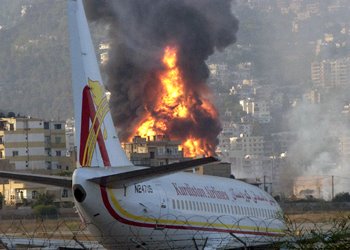
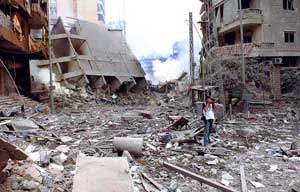
Yesterday was focused on killing civilians in South Lebanon, Baalbek and the southern suburb of Beirut. Israel continuously bombed homes and buildings. One set of bombing killed over 20 people when Israel targeted a twelve story building in Tyre (Sour) and leveled its top four stories. Another Near JibSheet targeted people's homes. Reports of bombs with ugly gas smell were confirmed by the Lebanese army as using phosphorous and other types of bombs outlawed internationally.
The Jieh power plant I told you about yesterday that Israel bombed, set the fuel tank on fire. We could see the smoke from our home. It kept burning from 5 in the morning until late through the night (we could see it up to the moment we went to sleep close to 12 midnight). Our balcony was filled with black dust from the fire and this morning there is a huge black cloud above the city as if it is going to rain, we can smell the smoke.
In the evening, Israel targeted Tripoli and Beirut ports once again. It also raided Beirut's airport five times in ten minutes each with two bombs. It also seems that Israel is fishing for weapons storage areas as well as destroying any time of infrastructure and economy. Last night it bombed through airplanes (my brother and I saw the bombs falling from our balcony) the cardboard plant east of Sidon (Saida) in a town called Kfar Jara, we could see the glow of fire most of the night. They also targeted an army post on a hill above Saida called the Mar Ellias hill (there is a church, few houses, and Saida's water tanks on the hill as well as a small Lebanese army post) via battleships (My aunt who lives by the sea could hear the bomb fly overhead and then the explosion which had us all jumping from our seats).
It is clear now to everyone that Israel has been planning this for a while. The US hoped that the Lebanese will disarm the Lebanese Resistance in Lebanon and worked via various entities including enforcing a sectarian crisis, the withdrawal of Syria, etc... to achieve those results. The crisis that has been ongoing in Lebanon now for a while along with all the assassinations were supposed to lead to the execution of the 1559. Now that the National dialogue declared the right of the resistance to exist considering that we have Lebanese prisoners in Israeli jails, we have the Shibaa Farms area (many villages and key strategic locations in the Sheikh Mountain) were still occupied by Israel, and we have Israeli intelligence operating in Lebanon; the US and Israel decided to take matters into their own hands. By all experts' opinions and by what we are witnessing daily, this is not a response to the capturing of the two soldiers but a planned attempt to destroy Lebanon and to destroy Lebanon's resistance. Two years ago, there was a similar operation where two dead soldiers were captured. Non-direct negotiations resulted in an exchange of some prisoners. However, the Knesset voted on keeping some of the Lebanese prisoners. There has been ongoing struggles in the south in the area that is still occupied. As such, Israel has been planning and was going to use any excuse it saw could be of most use to its usual International PR machine to give a cover for its operations in Lebanon. It is inconceivable to believe that Israel was able to prepare plans and maps of all these targets (bridges, roads, details of homes of Hizbullah leaders, offices of Hizbullah, Al-Manar TV station offices as well as three or four of its radars, Al-Nur Radio station, Radars of other cell phone companies, etc...) in about two or three hours. This has definitely been a plan in the works in case other US processes seem to have failed. Israel also quickly within less than a day declared via Olmert that its concern is for the disarming of the resistance and for the killing of Hizbullah leader Nasrallah and it is not any more (not that it ever was) about the two captured soldiers.
I am sure that the news reporting in the US is talking about poor Israel having the right to defend itself; but the reality on the ground is utterly different. The resistance has been very targeted in its response. From the first day, Nassrallah declared that if Israel wants the soldiers back it will have to negotiate (non-directly) and exchange with our prisoners. He stated clearly that the resistance has no intention of escalating violence and that the focus is on the exchange of prisoners. However, Israel immediately started bombing bridges and killed civilians. Then the resistance responded by bombing military posts during the first day trying to stop Israeli advances into South Lebanon as well as the ability of the tanks to bomb into villages. Israel immediately escalated by bombing civilian populations all over Lebanon and increasing the damage to infrastructures. Its regular PR statement is that Hizbullah places its rockets and offices among and in between homes and houses and as such it has no choice, which is utterly ridiculous. Yesterday Israel threw we call them Manasheer (statements on paper that are thrown from the planes) in Saida asking people to stay away from Hizbullah offices and rocket storage areas. Hizbullah does not have a presence in Saida. But Israel uses the same tactics in Palestine and in Lebanon to kill civilians from planes, apache helicopters, and battleships. They avoid on the ground battles dramatically (which maybe the only time when they would actually be in a fight with trained resistance fighters) and prefer to fire from high in the skies to kill whoever stands in their way.
All international positions have been really sickening and utterly ridiculous. It is inconceivable that the UN could not come out with a statement against this aggression. Basically as long as the US has given Israel the green light to do its work by eliminating the only resistance (next to the Palestinian resistance) against its interests in the region, there will be no condemnation and no end in sight to the war.
Zeina
Dear all,
Yesterday was focused on killing civilians in South Lebanon, Baalbek and the southern suburb of Beirut. Israel continuously bombed homes and buildings. One set of bombing killed over 20 people when Israel targeted a twelve story building in Tyre (Sour) and leveled its top four stories. Another Near JibSheet targeted people's homes. Reports of bombs with ugly gas smell were confirmed by the Lebanese army as using phosphorous and other types of bombs outlawed internationally.
The Jieh power plant I told you about yesterday that Israel bombed, set the fuel tank on fire. We could see the smoke from our home. It kept burning from 5 in the morning until late through the night (we could see it up to the moment we went to sleep close to 12 midnight). Our balcony was filled with black dust from the fire and this morning there is a huge black cloud above the city as if it is going to rain, we can smell the smoke.
In the evening, Israel targeted Tripoli and Beirut ports once again. It also raided Beirut's airport five times in ten minutes each with two bombs. It also seems that Israel is fishing for weapons storage areas as well as destroying any time of infrastructure and economy. Last night it bombed through airplanes (my brother and I saw the bombs falling from our balcony) the cardboard plant east of Sidon (Saida) in a town called Kfar Jara, we could see the glow of fire most of the night. They also targeted an army post on a hill above Saida called the Mar Ellias hill (there is a church, few houses, and Saida's water tanks on the hill as well as a small Lebanese army post) via battleships (My aunt who lives by the sea could hear the bomb fly overhead and then the explosion which had us all jumping from our seats).
It is clear now to everyone that Israel has been planning this for a while. The US hoped that the Lebanese will disarm the Lebanese Resistance in Lebanon and worked via various entities including enforcing a sectarian crisis, the withdrawal of Syria, etc... to achieve those results. The crisis that has been ongoing in Lebanon now for a while along with all the assassinations were supposed to lead to the execution of the 1559. Now that the National dialogue declared the right of the resistance to exist considering that we have Lebanese prisoners in Israeli jails, we have the Shibaa Farms area (many villages and key strategic locations in the Sheikh Mountain) were still occupied by Israel, and we have Israeli intelligence operating in Lebanon; the US and Israel decided to take matters into their own hands. By all experts' opinions and by what we are witnessing daily, this is not a response to the capturing of the two soldiers but a planned attempt to destroy Lebanon and to destroy Lebanon's resistance. Two years ago, there was a similar operation where two dead soldiers were captured. Non-direct negotiations resulted in an exchange of some prisoners. However, the Knesset voted on keeping some of the Lebanese prisoners. There has been ongoing struggles in the south in the area that is still occupied. As such, Israel has been planning and was going to use any excuse it saw could be of most use to its usual International PR machine to give a cover for its operations in Lebanon. It is inconceivable to believe that Israel was able to prepare plans and maps of all these targets (bridges, roads, details of homes of Hizbullah leaders, offices of Hizbullah, Al-Manar TV station offices as well as three or four of its radars, Al-Nur Radio station, Radars of other cell phone companies, etc...) in about two or three hours. This has definitely been a plan in the works in case other US processes seem to have failed. Israel also quickly within less than a day declared via Olmert that its concern is for the disarming of the resistance and for the killing of Hizbullah leader Nasrallah and it is not any more (not that it ever was) about the two captured soldiers.
I am sure that the news reporting in the US is talking about poor Israel having the right to defend itself; but the reality on the ground is utterly different. The resistance has been very targeted in its response. From the first day, Nassrallah declared that if Israel wants the soldiers back it will have to negotiate (non-directly) and exchange with our prisoners. He stated clearly that the resistance has no intention of escalating violence and that the focus is on the exchange of prisoners. However, Israel immediately started bombing bridges and killed civilians. Then the resistance responded by bombing military posts during the first day trying to stop Israeli advances into South Lebanon as well as the ability of the tanks to bomb into villages. Israel immediately escalated by bombing civilian populations all over Lebanon and increasing the damage to infrastructures. Its regular PR statement is that Hizbullah places its rockets and offices among and in between homes and houses and as such it has no choice, which is utterly ridiculous. Yesterday Israel threw we call them Manasheer (statements on paper that are thrown from the planes) in Saida asking people to stay away from Hizbullah offices and rocket storage areas. Hizbullah does not have a presence in Saida. But Israel uses the same tactics in Palestine and in Lebanon to kill civilians from planes, apache helicopters, and battleships. They avoid on the ground battles dramatically (which maybe the only time when they would actually be in a fight with trained resistance fighters) and prefer to fire from high in the skies to kill whoever stands in their way.
All international positions have been really sickening and utterly ridiculous. It is inconceivable that the UN could not come out with a statement against this aggression. Basically as long as the US has given Israel the green light to do its work by eliminating the only resistance (next to the Palestinian resistance) against its interests in the region, there will be no condemnation and no end in sight to the war.
Zeina
Update 2 from Saida Lebanon
Dear Friends,
Things are escalating fast. Israel has been bombing non-stop the southern suburb of Beirut. Most people have now become refugees residing in schools, with relatives, and in public parks. The images that we saw on the NBN/City TV network this morning of the damage done in this area were horrendous bringing back similar images to the 1982 invasion with building as tall as six and seven floors being leveled to the ground. They have also targeted most ports (Beirut, Tripoli, Juneih, Tyre, and Amsheet). They also targeted early this morning the power plant and fuel reserve of Jieh which were burned to the ground. They also targeted fire trucks that were trying to put out most of the fires that they started.
In Saida, they targeted the water tanks of the city, but it seems that they were not able to destroy them. In Saida, most stores are already running out of food and water supplies. Yesterday there already started lines and lines at the gas stations as Israel continues to target gas stations and power plants people worry about their ability to find fuel. Electricity is still working every eight hours. However, most of us that have membership in a generator, are worried about fuel running out of these generators. At least with electricity, people follow events and are able to see what is happening. Without electricity, we hear the planes overhead but we are not sure what is going on.
In my email yesterday, I told you about the Al-Marwahiyn town where the residents were turned around from finding shelter with the UN peace keeping mission base (UNFIL). Israel committed a massacre by targeting the buses and cars in which people were trying to flee the city based on their own threats. Over 20 people, many of them children, were all killed. Another such crime took place later during the day in another coastal town near Tyre.
To see images that are horrific, I recommend you check Arabic/Lebanese newspapers. Even if you do not understand the writing, the images do not need explanation. It is an all out war, and as usual the Israeli war machine does not discriminate and aims to kill and destroy. You can check http://www.assafir.com/ ; http://www.annahar.com.lb/; http://www.dailystar.com.lb/; http://angryarab.blogspot.com/; http://www.almustaqbal.com/; http://www.journaladdiyar.com/
Unlike the Israeli towns and villages, our buildings and homes are not equipped with bomb shelters and most people have no place to go. The targeting of all the roads cuts everything off. This includes food, medical equipment, the ability of ambulances to rescue victims, and the ability of people to flee to safer areas. My friend who works at the largest hospital in Saida told me of the frustrations in the hospital as the injured are not able to be delivered here in Saida because all the roads are destroyed. Most hospitals in the South are not really that big or that equipped with material to rescue and cure. People relied on the large hospitals in Saida for intensive operations and emergency cases. But so far, they are not able to arrive to the hospital here. As of yesterday, the number of deaths was close to 100 and the injured more. Today we still haven't seen any reporting of the casualties.
Seeing CNN and BBC here it is clear that you are not seeing anything much of the extent of the damage. The international community remains silent. Al-Manar showed demonstrations in various Arab and African countries as well as in Paris, etc... and the poll on Al-Jazeera net indicates that out of 62,000 people who took the poll, 92% believe that Hizbullah's operation is a legitimate resistance operation. Yet, Arab governments including many in the Lebanese government are willing to sacrifice everything and anything towards destroying the resistance. Everyone it seems is conspiring against the resistance. However, the people, all of our peoples everywhere are standing strong with the resistance.
All analysis seems to indicate that this could escalate into an all out regional war with Syria and Iran both involved. This remains to be seen, but they have both issued very strong statements. It is clear that Israel aims to destroy the resistance and these so-called Arab governments are complicit and one can say actively encouraging this process. Is another aim to force a regime change in Syria and to destroy or bomb Iran's nuclear plants? I believe, anything is possible and is on the table.
Things are escalating fast. Israel has been bombing non-stop the southern suburb of Beirut. Most people have now become refugees residing in schools, with relatives, and in public parks. The images that we saw on the NBN/City TV network this morning of the damage done in this area were horrendous bringing back similar images to the 1982 invasion with building as tall as six and seven floors being leveled to the ground. They have also targeted most ports (Beirut, Tripoli, Juneih, Tyre, and Amsheet). They also targeted early this morning the power plant and fuel reserve of Jieh which were burned to the ground. They also targeted fire trucks that were trying to put out most of the fires that they started.
In Saida, they targeted the water tanks of the city, but it seems that they were not able to destroy them. In Saida, most stores are already running out of food and water supplies. Yesterday there already started lines and lines at the gas stations as Israel continues to target gas stations and power plants people worry about their ability to find fuel. Electricity is still working every eight hours. However, most of us that have membership in a generator, are worried about fuel running out of these generators. At least with electricity, people follow events and are able to see what is happening. Without electricity, we hear the planes overhead but we are not sure what is going on.
In my email yesterday, I told you about the Al-Marwahiyn town where the residents were turned around from finding shelter with the UN peace keeping mission base (UNFIL). Israel committed a massacre by targeting the buses and cars in which people were trying to flee the city based on their own threats. Over 20 people, many of them children, were all killed. Another such crime took place later during the day in another coastal town near Tyre.
To see images that are horrific, I recommend you check Arabic/Lebanese newspapers. Even if you do not understand the writing, the images do not need explanation. It is an all out war, and as usual the Israeli war machine does not discriminate and aims to kill and destroy. You can check http://www.assafir.com/ ; http://www.annahar.com.lb/; http://www.dailystar.com.lb/; http://angryarab.blogspot.com/; http://www.almustaqbal.com/; http://www.journaladdiyar.com/
Unlike the Israeli towns and villages, our buildings and homes are not equipped with bomb shelters and most people have no place to go. The targeting of all the roads cuts everything off. This includes food, medical equipment, the ability of ambulances to rescue victims, and the ability of people to flee to safer areas. My friend who works at the largest hospital in Saida told me of the frustrations in the hospital as the injured are not able to be delivered here in Saida because all the roads are destroyed. Most hospitals in the South are not really that big or that equipped with material to rescue and cure. People relied on the large hospitals in Saida for intensive operations and emergency cases. But so far, they are not able to arrive to the hospital here. As of yesterday, the number of deaths was close to 100 and the injured more. Today we still haven't seen any reporting of the casualties.
Seeing CNN and BBC here it is clear that you are not seeing anything much of the extent of the damage. The international community remains silent. Al-Manar showed demonstrations in various Arab and African countries as well as in Paris, etc... and the poll on Al-Jazeera net indicates that out of 62,000 people who took the poll, 92% believe that Hizbullah's operation is a legitimate resistance operation. Yet, Arab governments including many in the Lebanese government are willing to sacrifice everything and anything towards destroying the resistance. Everyone it seems is conspiring against the resistance. However, the people, all of our peoples everywhere are standing strong with the resistance.
All analysis seems to indicate that this could escalate into an all out regional war with Syria and Iran both involved. This remains to be seen, but they have both issued very strong statements. It is clear that Israel aims to destroy the resistance and these so-called Arab governments are complicit and one can say actively encouraging this process. Is another aim to force a regime change in Syria and to destroy or bomb Iran's nuclear plants? I believe, anything is possible and is on the table.
Update one from Saida Lebanon
Saturday July 15, 2006
Dear all,
I just wanted to let you know that we are still okay. My family and I are all staying put and doing okay so far.
We barely slept for few hours last night, when we were woken up with planes roaming the skies above our heads and anti-aircraft artillery. We sat in the darkness as the electricity was still out listening and waiting to see what will happen. I also heard a helicopter flying over head. After a while, the planes raided few locations, the Zahrani bridge, the Hissbe (the major bulk grocery storage area), and few gas stations just on the southeastern entrance of the city (Saida - Sidon) and the western entrance of the Ein El Helwe refugee camp.
Now we are still hearing the planes flying overhead. They have been bombing many locations around the country with heavy artillery against villages on the southern border.
The Israelis so far have not been able to enter Aita al-Shaab to recover the tank that was exploded by Hizbullah and the bodies of the soldiers that were killed in the original operation (this is a main indication that the operation did take place on Lebanese soil, not that in my opinion it would ever be an illegitimate operation, but still the media has been saying that it was inside 'Israel' thus an aggression first started by Hizbullah).
Last night they told the villagers of Al-Marwahiyya, a village near Aita Al-Shaab to leave within two hours. Villagers went to hide in the UNFIL's base. The French group refused to let them in. They went to the other base near the village and the Fijians after many negotiations took their names and sent them back to stay in mosques and in husayniyya (which seems to be a death sentence given that Israel bombed a husayniyya near Baakbeck two days ago).
It is really crazy times we are witnessing where all this aggression and collective punishment is done against Palestinians and now Lebanese with no voice, no condemnation from anywhere. It is crazy times when our own f****ing governments absolve themselves from any responsibility towards our people. It is true as Sayyed Hassan said, the resistance has never relied on these governments. Our only support is the Palestinian and Lebanese people and Iran and Syria. In the history of the struggle with Israel, no one was every able to take down an Israeli battleship. Sayyid Hassan's statement reassured many of us, but the battle by all expectations will be long. I fear for internal strife inside Lebanon and the future of our resistance. There is no option but to resist and stay strong.
Zeina
(These are images of the destruction of the Awali bridge, the main entrance to the city from Beirut, that we took on Thursday evening )
)
Dear all,
I just wanted to let you know that we are still okay. My family and I are all staying put and doing okay so far.
We barely slept for few hours last night, when we were woken up with planes roaming the skies above our heads and anti-aircraft artillery. We sat in the darkness as the electricity was still out listening and waiting to see what will happen. I also heard a helicopter flying over head. After a while, the planes raided few locations, the Zahrani bridge, the Hissbe (the major bulk grocery storage area), and few gas stations just on the southeastern entrance of the city (Saida - Sidon) and the western entrance of the Ein El Helwe refugee camp.
Now we are still hearing the planes flying overhead. They have been bombing many locations around the country with heavy artillery against villages on the southern border.
The Israelis so far have not been able to enter Aita al-Shaab to recover the tank that was exploded by Hizbullah and the bodies of the soldiers that were killed in the original operation (this is a main indication that the operation did take place on Lebanese soil, not that in my opinion it would ever be an illegitimate operation, but still the media has been saying that it was inside 'Israel' thus an aggression first started by Hizbullah).
Last night they told the villagers of Al-Marwahiyya, a village near Aita Al-Shaab to leave within two hours. Villagers went to hide in the UNFIL's base. The French group refused to let them in. They went to the other base near the village and the Fijians after many negotiations took their names and sent them back to stay in mosques and in husayniyya (which seems to be a death sentence given that Israel bombed a husayniyya near Baakbeck two days ago).
It is really crazy times we are witnessing where all this aggression and collective punishment is done against Palestinians and now Lebanese with no voice, no condemnation from anywhere. It is crazy times when our own f****ing governments absolve themselves from any responsibility towards our people. It is true as Sayyed Hassan said, the resistance has never relied on these governments. Our only support is the Palestinian and Lebanese people and Iran and Syria. In the history of the struggle with Israel, no one was every able to take down an Israeli battleship. Sayyid Hassan's statement reassured many of us, but the battle by all expectations will be long. I fear for internal strife inside Lebanon and the future of our resistance. There is no option but to resist and stay strong.
Zeina
(These are images of the destruction of the Awali bridge, the main entrance to the city from Beirut, that we took on Thursday evening
 )
)


NCA Updates from Zeina in Lebanon
Dear all,
As many of you know, our dear friend and comrade, Zeina Zaatari, is in Saida, Lebanon with her family during these difficult times. We are very glad to inform you that she is safe and will be sending us regular updates on this blog for all to read and share with others.
hatta al-awda,
Lara
As many of you know, our dear friend and comrade, Zeina Zaatari, is in Saida, Lebanon with her family during these difficult times. We are very glad to inform you that she is safe and will be sending us regular updates on this blog for all to read and share with others.
hatta al-awda,
Lara
Wednesday, March 22, 2006
New Blog for Members of the NCA
The NCA has initiated this Blog to facilitate discussion amongst members of the NCA on matters that are of concern to Arabs and Arab Americans. Please feel free to use this as a space for you to post comments on current events, political developments and issues facing our community. We look forward to your participation.
Subscribe to:
Posts (Atom)

